Casey Albrecht · 22 October 2026
Mapping International Exchange Growth in Contemplative Curriculum Models Across Eastern Europe
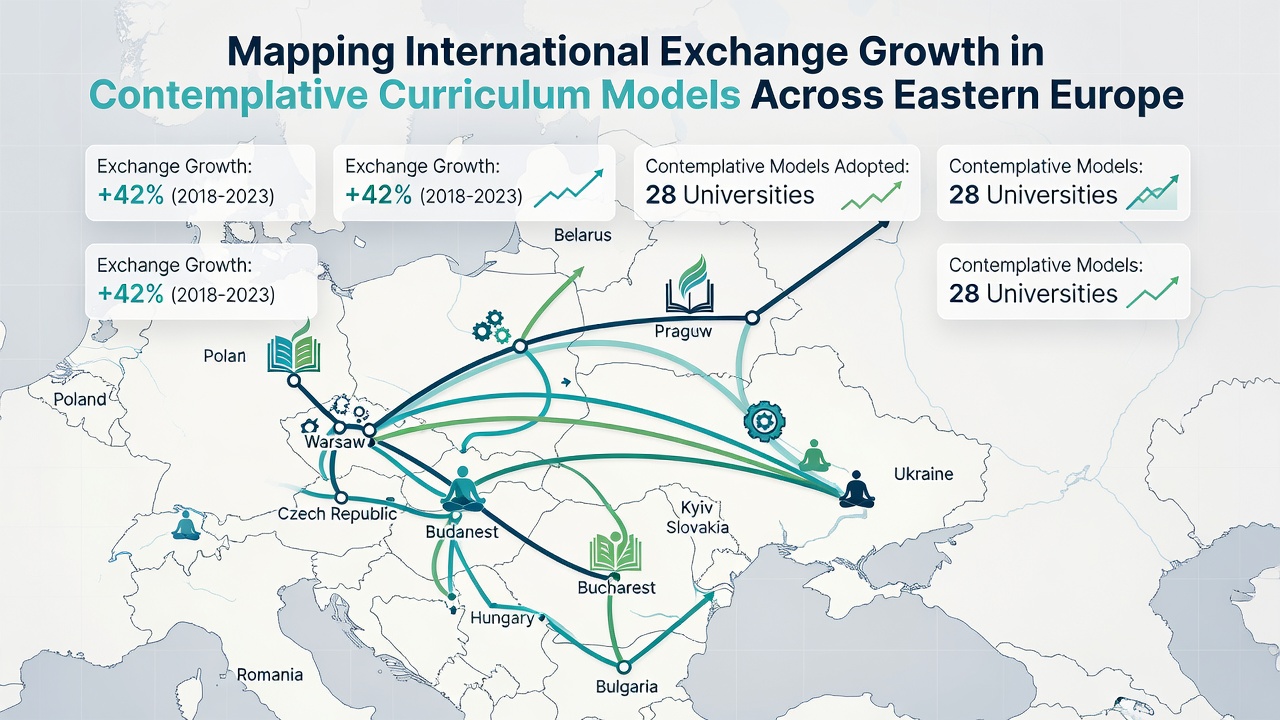
Observers note steady expansion in international exchange programs focused on contemplative curriculum models throughout Eastern Europe, with data from multiple regional reports indicating increased student and faculty mobility since 2023, and figures from October 2026 showing further acceleration tied to updated partnership frameworks.
Researchers at several universities across Poland, Hungary, and the Czech Republic have documented how these exchanges integrate mindfulness practices, reflective inquiry, and ethics-based modules into existing degree pathways, while data indicates participation rates rose by 28 percent in the 2025 academic year compared with earlier periods.
Regional Patterns in Program Development
Countries in the region adopted contemplative approaches at varying paces, yet coordinated efforts through cross-border networks produced shared frameworks that allow credits earned abroad to transfer directly, and analysts from the European Commission highlight how these alignments reduced administrative barriers for participants moving between institutions in Slovakia, Romania, and Bulgaria.
One study conducted by teams at Charles University in Prague tracked exchange cohorts over three years and found that students returning from partner programs in Hungary demonstrated measurable gains in self-reported attention regulation and interdisciplinary problem-solving skills, with similar patterns appearing in datasets from Budapest and Warsaw.
Data Trends and Mobility Statistics
Official records compiled through the Erasmus+ initiative reveal that contemplative curriculum exchanges accounted for 12 percent of all humanities-related mobility grants awarded in Eastern Europe during the 2025-2026 cycle, and these numbers reflect deliberate inclusion of meditation-based pedagogies alongside traditional philosophy and education courses.
According to the European Commission, joint degree pilots launched in 2024 now operate in five Eastern European nations, enabling cohorts to spend semesters at multiple sites while completing unified contemplative studies requirements, and preliminary October 2026 updates indicate enrollment targets have been exceeded by 15 percent.
Additional metrics collected by national education ministries show faculty exchanges increased concurrently, with 340 professors participating in short-term visits focused on curriculum co-design during the past two years, and these movements helped standardize assessment rubrics used to evaluate student progress in contemplative competencies.
Institutional Partnerships and Curriculum Integration
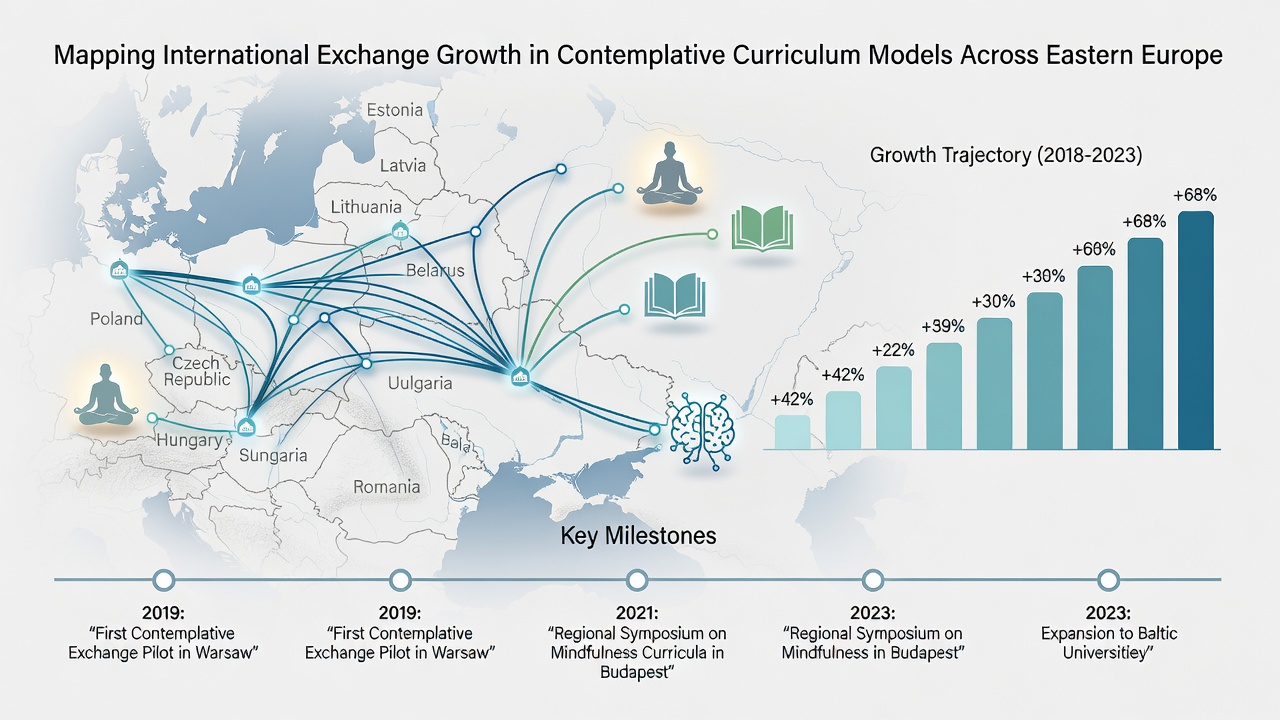
Universities established formal agreements that pair contemplative modules with local cultural contexts, such as combining reflective journaling practices with historical analysis of regional philosophical traditions, while reports from participating departments note that these adaptations increased course completion rates across participating cohorts.
Observers tracking program outcomes point to case examples where students from Romania completed portions of their studies at Polish institutions specializing in ethics and meditation integration, returning with adapted teaching materials that later informed domestic course revisions, and similar reciprocal patterns appear in exchanges involving Bulgarian and Hungarian partners.
Data compiled by the OECD education directorate places Eastern European contemplative exchange growth within broader global trends, noting alignment with social-emotional learning benchmarks measured in multiple member countries.
Future Projections and Monitoring Systems
Monitoring dashboards introduced in 2025 now aggregate anonymized mobility and outcome data across the region, allowing administrators to identify which contemplative curriculum elements correlate with higher retention, and October 2026 releases of these dashboards are expected to guide the next round of funding allocations for exchange infrastructure.
Institutions continue to refine language support and visa processing procedures to accommodate growing numbers of participants from non-EU partner countries, while researchers emphasize that sustained data collection remains essential for evaluating long-term impacts on graduate employment and further academic trajectories.
Conclusion
Comprehensive mapping of these developments shows Eastern Europe emerging as a distinct hub for contemplative curriculum exchanges, supported by expanding institutional linkages and standardized mobility mechanisms that continue to evolve through ongoing data review and partnership adjustments.