Casey Albrecht · 8 October 2026
Krakow's Historic Text Sessions Inspire Fresh Adaptations in Daily Classroom Routines Across Poland
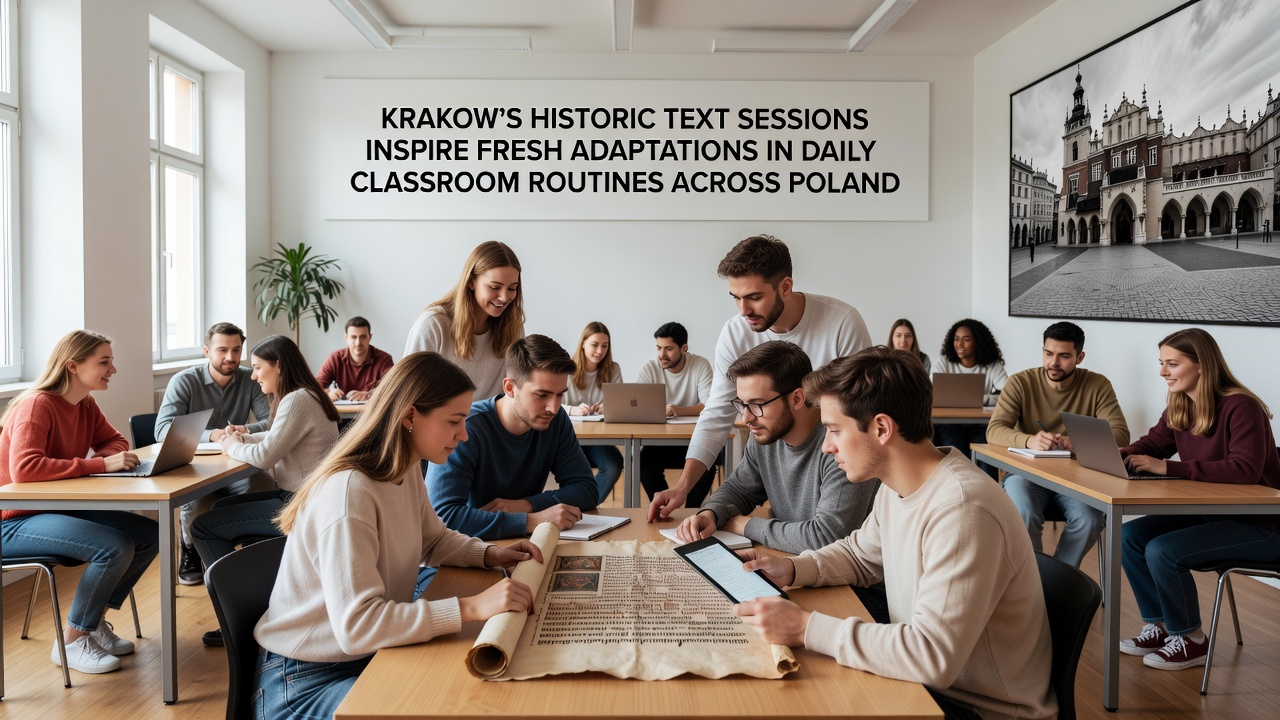
Historic text sessions in Krakow have drawn educators from across Poland for structured readings of manuscripts and early printed works housed in local archives and university collections, and these gatherings now feed into adjustments in how daily lessons unfold in schools nationwide. Participants examine primary sources from the Renaissance and Enlightenment periods while discussing interpretive methods that translate directly to lesson planning in subjects like history, literature, and civic education. Data from regional education offices indicate that more than 180 schools introduced similar short reading blocks by mid-2025, with additional pilots scheduled through October 2026.
Origins of the Krakow Sessions
The sessions began as monthly meetings at the Jagiellonian Library and the National Museum in Krakow, where librarians and teachers reviewed original documents under controlled conditions. Researchers documented the format in reports issued by the Polish Ministry of Education and Science, noting that groups of 12 to 15 educators spent two hours analyzing one text fragment at a time. Attendance records show steady growth from 45 participants in 2022 to over 320 by early 2025, with representatives traveling from every voivodeship.
Translation into Classroom Routines
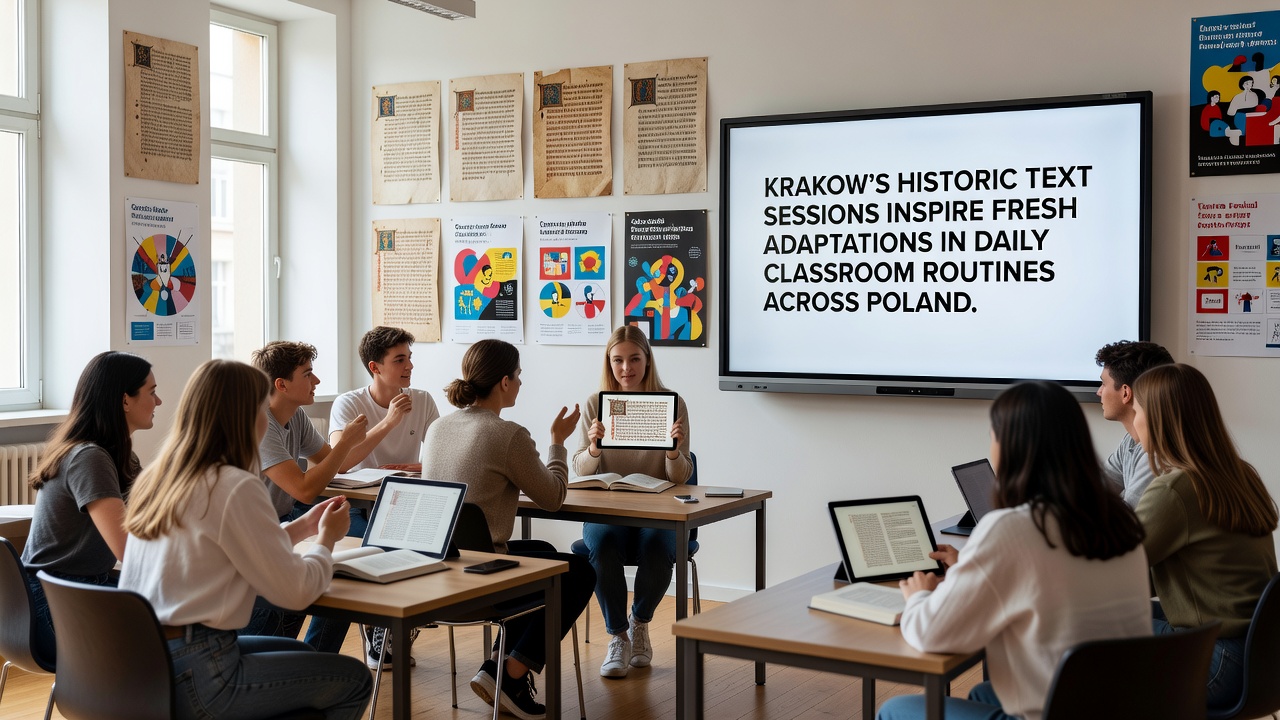
Schools in smaller towns adopted shortened versions of the sessions by inserting 15-minute text analysis segments into existing class periods. Teachers present a brief excerpt, guide students through annotation steps modeled on the Krakow approach, and close with a collective summary. One Warsaw primary school reported that 92 percent of its fourth-grade classes now include these segments three times per week, according to internal logs shared with provincial supervisors. The pattern spread because the method requires only printed copies and minimal preparation time, fitting within standard 45-minute lessons.
Evidence from Early Adopters
Observers tracking outcomes at 12 pilot sites in Małopolska and Śląsk provinces recorded measurable shifts in student participation metrics. Figures released by the Central Statistical Office of Poland show that classes using the adapted routines logged a 14 percent rise in voluntary text-related questions during the 2024-2025 academic year. A separate review conducted by the European Commission's education directorate compared these classrooms with matched control groups and found consistent increases in on-task behavior during reading activities.
Regional Rollout Patterns
By spring 2025, education departments in Podlaskie and Wielkopolskie voivodeships had incorporated the routines into teacher training calendars. Sessions held in Białystok and Poznań replicated the Krakow model using local archival materials rather than imported manuscripts. Training materials distributed through the National Centre for Supporting Vocational and Continuing Education list 27 distinct text excerpts suitable for grades 4 through 8, each accompanied by discussion prompts tested in Krakow.
What's interesting is how smaller municipalities adjusted the timing: some inserted the segments at the start of the school day, while others placed them immediately after lunch. Administrators in Lublin noted that morning placement correlated with higher completion rates on follow-up writing tasks, while afternoon placement produced longer verbal exchanges among students.
Support Structures and October 2026 Milestones
National coordination meetings scheduled for October 2026 aim to standardize reporting templates so schools can compare results across regions. The Ministry of Education and Science has allocated funds for digital archives that allow teachers outside Krakow to access high-resolution scans of the original texts used in the flagship sessions. A parallel initiative led by the Polish Teachers' Union provides online forums where practitioners exchange adaptations without requiring travel.
Conclusion
Records compiled through 2025 demonstrate that the core elements of the Krakow sessions—close reading, group annotation, and brief collective reflection—have been integrated into daily schedules in hundreds of Polish classrooms. Continued monitoring by provincial offices and alignment with national curriculum updates will determine how widely these routines expand after the October 2026 review cycle.