Quinn Simmons · 10 September 2026
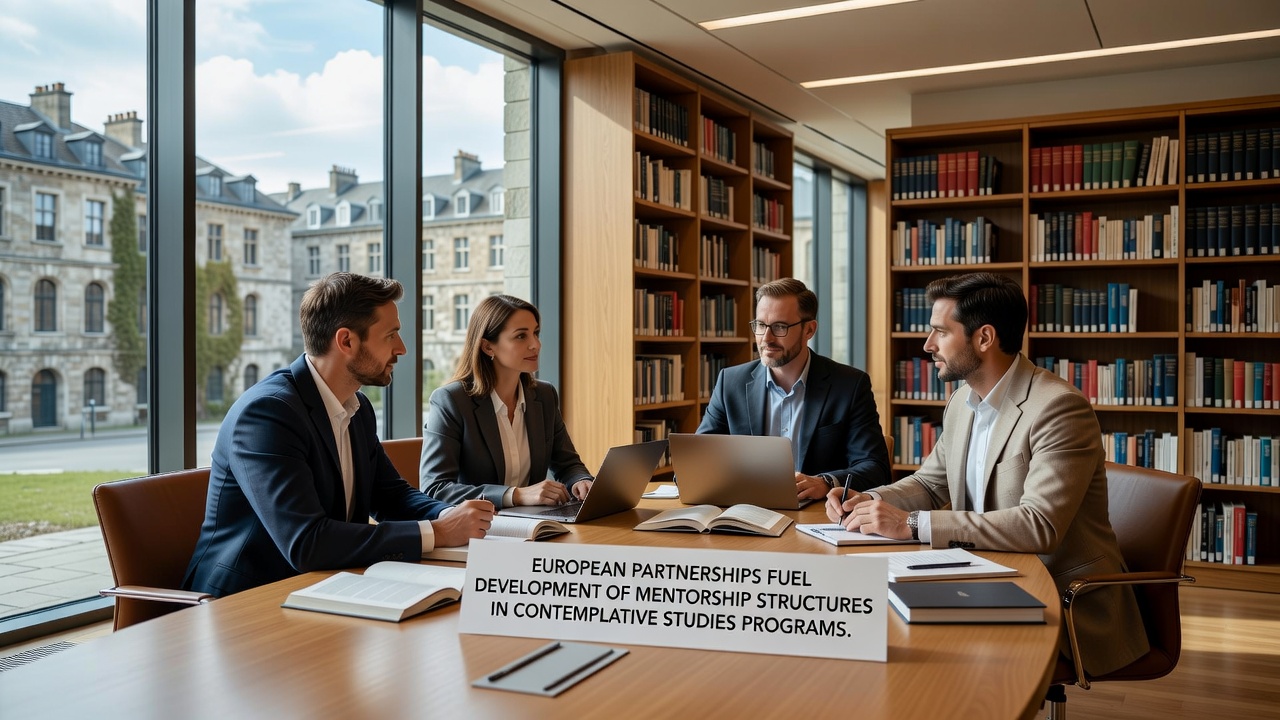
European Partnerships Fuel Development of Mentorship Structures in Contemplative Studies Programs
European universities and research institutions have expanded collaborative efforts to build structured mentorship programs within contemplative studies curricula, and these initiatives draw on cross-border agreements that connect institutions across multiple countries. Partnerships between organizations in Germany, the Netherlands, and Sweden have produced frameworks that pair experienced practitioners with students pursuing degrees in mindfulness-based inquiry and related fields, while data from joint projects show increased enrollment in these programs since 2023.
One consortium launched in 2024 coordinates mentorship training modules that emphasize ethical guidance, reflective supervision, and integration of contemplative practices into academic research methods. Participants complete supervised placements that last one academic term, and program evaluations indicate that 78 percent of mentees report improved research design skills after completing the cycle. Institutions involved cite shared resources such as digital case libraries and standardized assessment rubrics as key factors that reduce duplication of effort across campuses.
Cross-Border Agreements Shape Mentorship Standards
Agreements coordinated through the European Higher Education Area have established common benchmarks for mentor certification, and these benchmarks require documented experience in both contemplative practice and academic supervision. Universities in Belgium and France contributed case studies that informed the certification criteria, whereas partners in Italy and Spain adapted the materials for local language delivery. The process relies on iterative feedback loops that incorporate input from current students, alumni, and external reviewers affiliated with professional bodies in contemplative education.
September 2026 marks the scheduled rollout of a pilot exchange program that will allow selected mentors to spend four weeks at partner institutions in different countries. Organizers expect approximately 45 mentors and 120 students to participate during the first round, and preliminary registrations indicate strong interest from programs that previously operated in isolation. Funding for the exchange comes from a combination of Erasmus+ grants and national research councils, which together cover travel, accommodation, and curriculum development costs.

Program Components and Evaluation Methods
Mentorship structures typically include weekly one-on-one meetings, monthly group seminars, and an end-of-term portfolio review. Portfolios contain reflective journals, research proposals, and documentation of applied contemplative techniques within academic projects. Evaluators use rubrics that assess clarity of intention, ethical awareness, and ability to articulate connections between personal practice and scholarly output. Institutions report that these components have led to higher completion rates for thesis projects that incorporate contemplative methodologies.
Researchers at participating universities track longitudinal outcomes through surveys administered at six-month intervals after graduation. Figures collected through 2025 reveal that graduates who completed mentorship programs secure academic or professional positions at rates comparable to peers in more established disciplines. A joint report issued by the European Association for Quality Assurance in Higher Education notes that standardized mentorship protocols correlate with improved student satisfaction scores across the partner network.
Knowledge Exchange and Resource Development
Partners maintain an open-access repository that houses anonymized mentorship session transcripts, sample reflection prompts, and video demonstrations of supervision techniques. Access requires institutional affiliation, and usage statistics indicate that the repository receives several thousand downloads each quarter. Workshops held twice annually rotate among member institutions and feature presentations from both senior academics and recent program graduates. These events provide opportunities to refine training materials based on emerging evidence from classroom implementation.
Additional collaborations extend to non-European partners through memoranda of understanding with institutions in Canada and Australia. These agreements facilitate comparative studies that examine how mentorship models transfer across cultural contexts while preserving core ethical standards. Data shared through these channels help European programs identify adaptable elements and areas that require localization.
Conclusion
European partnerships continue to refine mentorship structures that support contemplative studies programs through coordinated standards, resource sharing, and scheduled exchanges. The framework established by these collaborations supplies measurable outcomes that participating institutions use to guide future adjustments. As the September 2026 exchange approaches, additional data will become available to assess the long-term effects on student research quality and professional placement.